

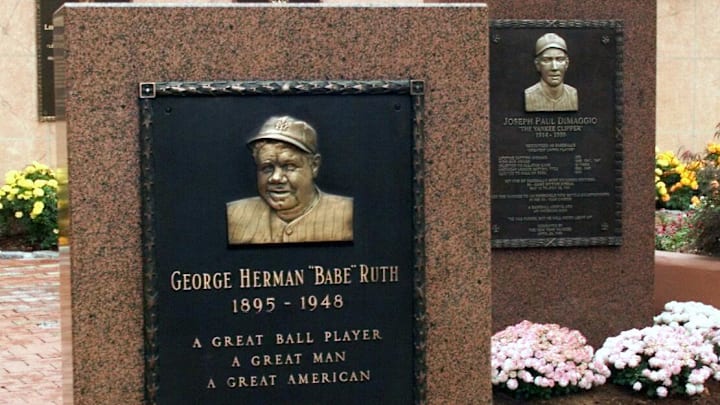
For most Hall of Fame and Yankees-obsessed collectors, owning a Babe Ruth card feels less like a goal and more like a dream. We imagine it the way we imagine his swing—larger than life. The Sultan of Swat isn’t just baseball’s most iconic figure; he is the gravitational center of the entire sports card hobby. His earliest cards routinely command staggering prices, vanishing into private collections or headline-making auctions. And yet, buried within that seemingly unreachable market is a truth many collectors overlook: owning a legitimate, playing-days Babe Ruth card is still possible.
The Best Affordable Babe Ruth Card: 1933 Goudey
For collectors searching for the best Babe Ruth card that doesn’t require selling their house to buy it, they can find it in the 1933 Goudey set—specifically cards like No. 144 and No. 181. These issues have become the most realistic entry point into owning a true Ruth card from his playing days.
They are not cheap. But compared to ultra-rare pre-war issues like the T206-era cards or scarce regional releases, the 1933 Goudey Babe Ruth offers a chance to own a card that is historically significant, widely recognized, and available across a range of price points depending on condition.
Why the 1933 Goudey Babe Ruth Still Matters
The availability of the 1933 Goudey Ruth is explicable. Released during the Great Depression, the Goudey set was one of the first widely distributed gum card issues of the modern era. Unlike earlier tobacco cards, which were printed in more limited quantities, Goudey cards reached a growing fan base as baseball soared in popularity.
Ruth, already larger than life, was featured prominently. The result is a series of four cards in the set that blend mass recognition with enough surviving supply to keep the market active. Unlike ultra-rare vintage cards that surface only occasionally, Goudey Ruths trade regularly, making it relatively easy to comp and ownership a realistic goal.
While thousands of 1933 Goudey Babe Ruth cards exist as this was a card that fans treasured and saved, true scarcity shows at higher grades. Centering issues, flipping, print defects, and nearly a century of less-than-stellar preservation have drastically reduced the number of eye-catching examples. High-grade copies command enormous premiums.
But a lower-grade example—one with rounded corners, visible wear, and the marks of time—still delivers the full historical and visual impact of the card. In a hobby increasingly obsessed with perfection, the Goudey Ruth offers something more meaningful: authenticity. You are not just buying a card; you are acquiring an artifact that has survived generations.
The 1933 Goudey Babe Ruth is more than cardboard—it is a time capsule. These cards were once pulled from packs by children during the Great Depression, handled by fans who watched Ruth play, and passed on from generation to generation through decades of history.
Ruth’s cultural impact extends far beyond statistics. He transformed baseball into a spectacle, bringing power, charisma, and personality to the game. He was the player every batter in a Sandlot or neighborhood stickball game named themselves at the plate When he died in 1948, thousands of fans lined up at Yankee Stadium to pay their respects, a testament to his place not just in sports, but in American life.
Owning his card is not simply about collecting—it is about proximity to that legacy.
The Investment Case: A Blue-Chip Collectible
From an investment perspective, the 1933 Goudey Babe Ruth behaves less like a speculative asset and more like a core portfolio holding. Unlike modern cards tied to active players, Ruth’s legacy is complete. There are no injuries, slumps, or controversies left to shape his story. His place in history is permanent. Even Shohei Ohtani’s rise doesn’t diminish Ruth’s career—it only reminds collectors of the rarity of his talent.
Ruth’s stability creates a lower-risk profile relative to more volatile segments of the hobby. Demand for Ruth has remained consistent across generations, and as new collectors enter the market, many gravitate toward recognizable, historically significant cards.
In that sense, the Goudey Ruth functions similarly to established names in traditional markets—companies like Amazon or Apple—assets that may not deliver explosive short-term gains but have demonstrated long-term durability and steady appreciation. And this says nothing of the enjoyment seeing a Ruth in a collection brings.
Why Not Earlier Babe Ruth Cards?
It’s fair to ask: why not go earlier?
Aside from the ultra-rare, surreal, and visually stunning 1914 Baltimore News rookie, many of Ruth’s pre-1933 cards fall into categories that are less appealing to modern collectors and likely have less appreciation potential—strip cards, Exhibit postcards, or niche food and beverage issues. Many lack the visual appeal, production quality, comps, and cohesive set structure that define the Goudey release.
The 1933 Goudey set represents something different. It is arguably Ruth’s first widely distributed, visually striking, full-color card issued during his playing career as part of a major, nationally recognized set. That distinction gives it added weight in the hobby.
Another factor that elevates the 1933 Goudey Babe Ruth is its visual appeal. Many earlier cards of Ruth were printed in black and white or sepia tones. While historically significant, they lack the vibrant presence that modern collectors often seek.
The Goudey cards changed that. Bold colors, clean design, and striking imagery make them stand out even today. Compared to alternatives like the 1932 U.S. Caramel Ruth—often limited to headshots—the Goudey cards feel alive, dynamic, and instantly recognizable.
That visual impact matters. It broadens the card’s appeal beyond hardcore collectors to casual fans and new entrants to the hobby.
The idea of an “affordable” Babe Ruth card will always be relative. These are not impulse purchases. They require patience, research, and a long-term mindset. But compared to the highest tiers of the market, the 1933 Goudey Babe Ruth represents an opportunity to own something special. It allows collectors to move beyond admiration and into ownership. To shift from observing history to holding it. And in a hobby built on connection, nostalgia, and legacy—that is what truly matters.
 Add us as a preferred source on Google